Chiang Mai’s best sights sit inside or just outside the moat, so most fit around a working week, leaving the day trips further out for weekends. Here are eight worth doing; fees change, so treat prices as a guide.
1. Wat Chedi Luang and the Old City temples — best for a first afternoon
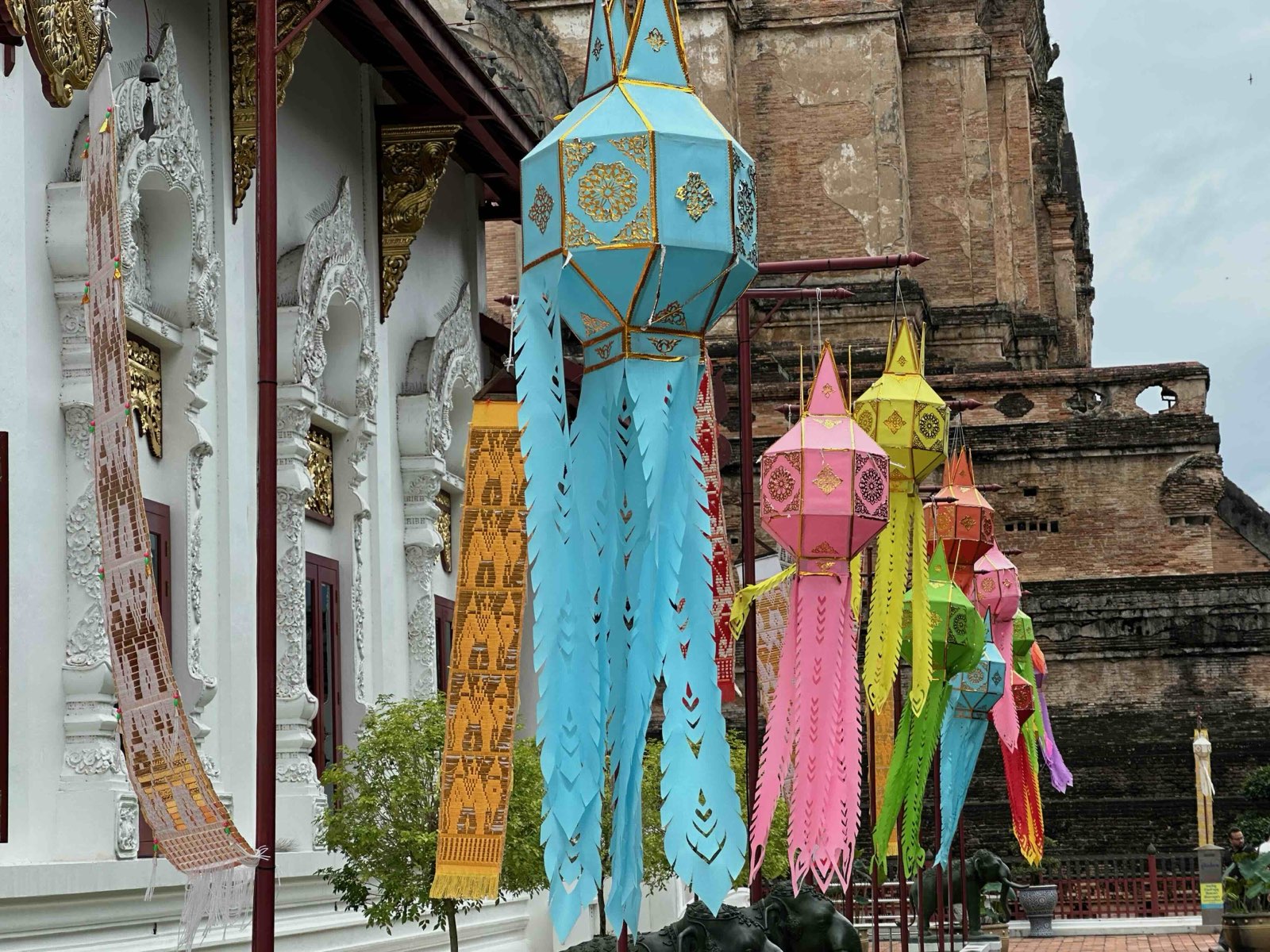
Wat Chedi Luang is the most striking of the Old City’s temples, built around a huge brick chedi whose upper section was lost to an earthquake centuries ago. Next door, Wat Phan Tao has a dark teak prayer hall that is easy to miss.
- Where: Prapokklao Road for Wat Chedi Luang; Wat Phra Singh sits at the western end of Ratchadamnoen Road.
- Cost: about ฿40 for foreigners at Wat Chedi Luang, through a separate entrance to the left of the main gate; Wat Phra Singh charges a small fee (commonly ฿20–50) for its main halls, while the grounds are free.
- Best time: early morning or late afternoon, when it is cooler.
- Who it suits: everyone, especially new arrivals getting their bearings.
- Upsides: walkable, cheap and genuinely impressive.
- Downsides: midday tour groups in high season.
2. Wat Phra That Doi Suthep — best for the view
Northern Thailand’s most revered temple overlooks the city from the mountain. A naga-lined staircase climbs to the golden chedi, with a funicular alongside.
- Where: up a winding road from the Nimman end of Huay Kaew Road.
- Cost: ฿30 for foreigners, plus a small extra fee if you take the funicular; red songthaews run up from Chang Phueak Gate for around ฿50 per person.
- Best time: sunrise or early morning, before the haze and crowds build.
- Who it suits: anyone with a free morning.
- Upsides: sweeping views over the city on a clear day.
- Downsides: the view disappears during the smoky season, roughly February to April.
3. Wat Umong and Baan Kang Wat — best for a quiet morning
Wat Umong is a forest temple at the foot of Doi Suthep, known for brick tunnels with small shrines set into the walls. A few minutes away, Baan Kang Wat is a small creative village of studios, cafés and craft shops, with a morning market on Sundays.
- Where: off Suthep Road, west of the Old City near Chiang Mai University.
- Cost: around ฿20 at Wat Umong, sometimes treated as a donation; Baan Kang Wat is free to enter.
- Best time: Sunday morning, roughly 8am–1pm, to catch the market; many studios close on Mondays.
- Who it suits: those living in Nimman or Suthep who want something close to home.
- Upsides: shady, calm and far less crowded than the Old City.
- Downsides: hard to reach without your own transport.
4. The Sunday and Saturday walking streets — best for weekend evenings
Every Sunday, Ratchadamnoen Road closes to traffic and fills with food, crafts and street performers from Tha Phae Gate to Wat Phra Singh. On Saturdays, Wua Lai Road south of the Old City hosts a smaller version, known for its silver workshops.
- Where: Ratchadamnoen Road (Sunday) and Wua Lai Road (Saturday).
- Cost: free to browse; street food mostly ฿30–80 a dish.
- Best time: stalls open from around 4pm; arrive by 5pm, before the crowds peak.
- Who it suits: everyone.
- Upsides: great value food and a lively atmosphere.
- Downsides: packed by 7pm. When the national anthem plays at 6pm, the market stands still, so do the same.
5. Warorot Market — best for local shopping
Known locally as Kad Luang, this multi-storey market sells northern sausage, dried fruit and fabric, with the Ton Lam Yai flower market across the road.
- Where: Chang Moi, between the Old City and the river.
- Cost: free to enter.
- Best time: morning; many vendors pack up once they have sold out, and the flower market is freshest early.
- Who it suits: anyone stocking up a new apartment or buying food gifts.
- Upsides: local prices and a real working market.
- Downsides: hot and cramped.
6. A Thai cooking class — best for a rainy day
Cooking schools run half-day and full-day courses, usually starting with a guided market walk.
- Where: the Old City and farms outside town, often with pickup.
- Cost: roughly ฿1,000–1,500 for a half day and ฿1,500–2,500 for a full day.
- Best time: any time of year; evening classes fit around a working day.
- Who it suits: food lovers and visiting friends.
- Upsides: you eat everything you make and leave with recipes.
- Downsides: group sizes vary widely, so check reviews.
7. Muay Thai — best for staying fit
Dozens of gyms welcome complete beginners, including Heavy Hit Boxing Gym, which runs introductory classes with English-speaking trainers.
- Where: gyms citywide; fights at Thapae Boxing Stadium and the Loi Kroh ring near the Night Bazaar.
- Cost: about ฿300–600 for a drop-in training session; fight tickets typically from ฿400–600, with ringside seats costing more.
- Best time: morning or late-afternoon sessions, avoiding the midday heat.
- Who it suits: those who want a fitness routine with a social side.
- Upsides: an excellent workout and a quick way to meet people.
- Downsides: gruelling in the hot season, and some fight nights are aimed squarely at tourists.
8. Huay Tung Tao and Grand Canyon water park — best for a lazy Sunday
At Huay Tung Tao reservoir, bamboo huts line the water and restaurants bring food to your hut. Grand Canyon water park, a flooded former quarry, adds inflatable courses and cliff jumps.
- Where: Huay Tung Tao in Mae Rim; Grand Canyon in Hang Dong.
- Cost: about ฿50 for foreigners at Huay Tung Tao, cash only; Grand Canyon roughly ฿550–950 depending on the package.
- Best time: the hot season from March to May, or any weekend afternoon.
- Who it suits: groups of friends.
- Upsides: a change of scene close to the city.
- Downsides: both are crowded at weekends and on public holidays.
Which festivals are worth planning around?
Yi Peng and Loy Krathong, usually in November, fill the moat and the Ping River with candlelit floats. Releasing sky lanterns is restricted in the city, particularly near the airport, so the famous mass releases take place at ticketed events outside town. Songkran, the Thai New Year on 13 to 15 April, turns the Old City moat into a giant water fight. Both bring crowds and higher prices, covered in more detail in the best time to visit Chiang Mai.
How do remote workers fit it all in?
Temples and Doi Suthep work best as early outings before the working day, while the walking streets and lakes belong to weekends. Weekday evenings suit cooking classes and Muay Thai, and later the city’s bars range from live music and jazz to cocktail bars and Thai clubs. Foot massage shops are on almost every street, and for a full Thai massage, some centres employ former prisoners to help them back into work. Nimman and Suthep put Wat Umong and Doi Suthep close by, while the Old City puts the temples on your doorstep, as covered in the best areas to live in Chiang Mai. Most of the city’s sights are cheap or free, which helps keep the cost of living in Chiang Mai low.